Fundamentals of AI in 2026
AI is a combination of computer science, data, and problem-solving. The Fundamentals of AI in 2026 blog discussed simple words about AI.
“AI” is the term used to describe machines that act intelligently. It uses statistical techniques to deliver predictions and inferences from data.
“AI” refers to something that is made by humans or non-natural things.
and Intelligence means the ability to understands anything or think
AI is not a system, but it is implemented inside the system.
What Is Artificial Intelligence?
The goal of artificial intelligence (AI) is to create machines with human-like—or occasionally Greater than human, sometimes better than human—thinking, learning, and decision-making abilities. Imagine teaching a computer to understand something mentally as patterns, learn and adjust to new information, and develop over time in addition to simply following instructions. That is AI in action.
Artificial Intelligence (AI) is the simulation of human intelligence processes by machines, especially computer systems. They are able to learn, reason, solve problems, perceive language, and carry out tasks like speech recognition, decision-making, and creative content that would typically require human intellect. Without explicit programming for every situation, AI gradually improves performance by analyzing vast amounts of data, identifying patterns, and making predictions or taking action.
AI’s Importance in 2026
In 2026, artificial intelligence will be essential. It is incorporated into numerous departments and areas, including businesses, hospitals, classrooms, cars, and smartphones. AI is now the cornerstone of digital innovation, whether it is applied to engineering, medical diagnosis, content creation, or personalized learning.
Evolution of Artificial Intelligence
AI does not appear. Overnight, it is the result of so many years back to now, or decades of trial and error and breakthroughs.
1950 – Turning Proposes text
1956 – The term “AI” coined
1965 – ELIZA-Chatbot
1969 – Perceptrons Criticized
1970 – 1st AI Conference
1979—Japan’s AI Project
1985 – Natural Language
1997 – Deep Blue Victory
1999 – Robo Starts
2005 – Standaard AI
2009 – Deep Founded
2011 – Watson wins Jeopardy!
2012—Cat video breakthrough
2016—AlphaGo
2018—GPT model releases
2020—GPT-3 launch
2021 – AI advancement
Core Categories (Concepts) of AI
The Fundamentals of AI in 2026 blog states, “Today’s AI is generally classified by its level of capability:
Artificial Narrow Intelligence (ANI):
Also called “Weak AI,” these systems are designed to perform a single specific task or a narrow set of tasks, such as voice assistants, filtering spam, recommending movies, or recognizing faces. This is the only type of AI that currently exists.
EX:
Voice assistance: Siri or Alexa
Security Systems: Facial recognition
Recommendation engines: Netflix or Amazon
Artificial General Intelligence (AGI):
A theoretical concept where AI can perform any intellectual task that a human can do. “strong AI” that could understand, learn, and apply knowledge across any intellectual task at a level equal to a human.
EX: Robots
Medical Specializes
Artificial Superintelligence (ASI):
A hypothetical future form of AI that would surpass human intelligence in problem-solving, creativity, and overall ability in all areas or across all fields, including creativity and social skills. It performs tasks more effectively than humans.
Key Technologies
Fundamentals of AI in 2026 states that AI is often an “ensemble” of different technologies working together:
Types of AI Bases on Capabilities
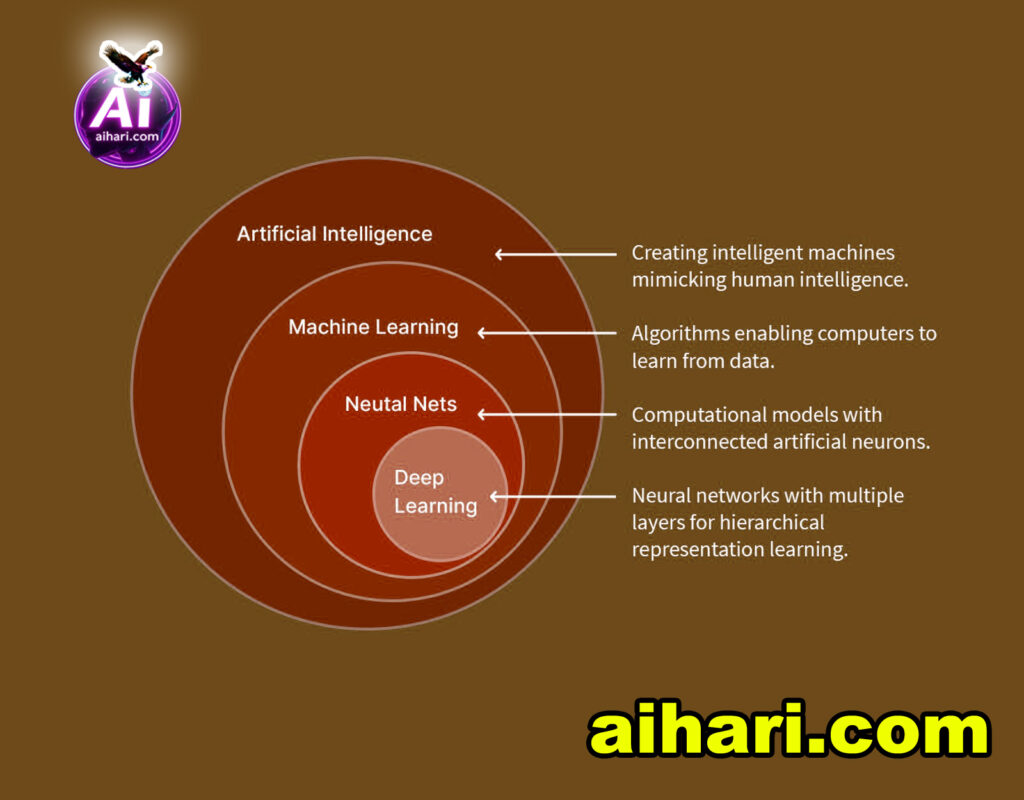
Machine Learning (ML):
- A subset of AI where systems use algorithms to identify patterns in data and improve their performance over time without being explicitly programmed for every scenario.
Deep Learning (DL):
- A more advanced form of ML that uses neural networks—layers of algorithms inspired by the human brain—to process vast amounts of unstructured data like images and speech.
Generative AI (GenAI):
- A type of deep learning that can create entirely new content, such as text, images, or music, based on its training data.
Natural Language Processing (NLP):
Enables computers to understand, interpret, and generate human language, powering tools like virtual assistants and translation services.
FAQs
What is the most important AI concept to understand in 2026?
Machine learning, especially deep learning, remains the foundation of modern AI.
Is AI dangerous or beneficial?
AI is a tool. Its impact depends on how responsibly humans use it.
Do I need coding skills to understand AI?
Not necessarily. Conceptual understanding is just as important.
How is AI different in 2026 compared to earlier years?
AI is more multimodal, generative, and integrated into daily life.
Will AI replace human jobs completely?
AI will transform jobs, not eliminate humanity’s role.
Conclusion:
The fundamentals of AI in 2026 reveal a technology that’s mature, powerful, and deeply integrated into everyday life. Understanding how AI works isn’t just for engineers and doctors and other particular categories of humans anymore—it’s for everyone who wants to stay relevant in a rapidly evolving world.
| AI is not replacing humanity; it’s reshaping it. |
.